
Imagining the Future of Local Production: ISAIC Attends 2026 National Gathering Hosted by Mechanism
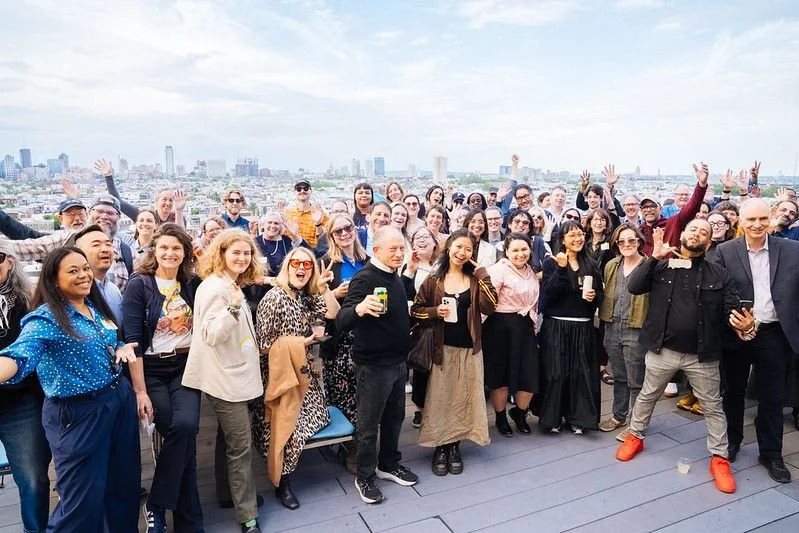
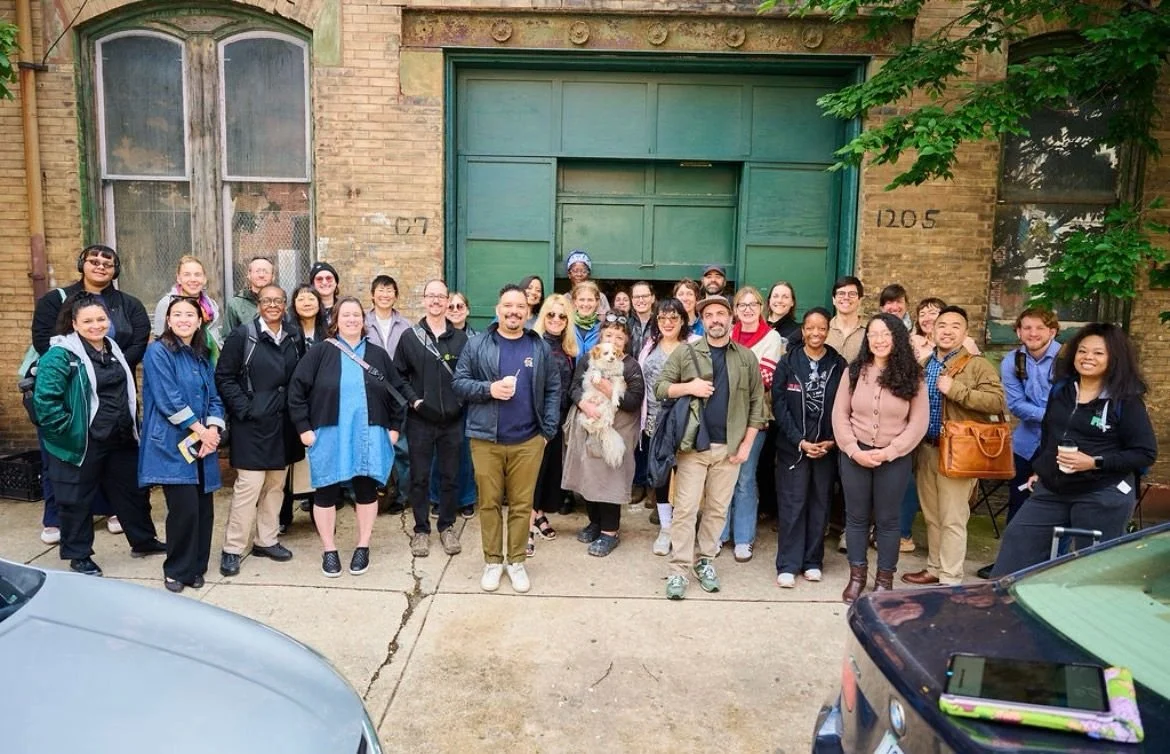
ISAIC’s Project Manager of Training & Innovation, Cassie Franklin, and Skilling Manager, Olivia Marshall, attending the 2026 National Gathering hosted by Mechanism. Photo by Arekusn Nguyen
May 12–14, 2026 — Philadelphia, Pennsylvania
Last month, ISAIC’s Project Manager of Training & Innovation, Cassie Franklin, and Skilling Manager, Olivia Marshall, attended the 2026 National Gathering hosted by Mechanism in partnership with the City of Philadelphia’s Department of Commerce.
Centered around the theme, “Imagining the Future of Local Production,” the gathering brought together makers, manufacturers, policymakers, educators, artists, faith organizations, community leaders, and entrepreneurs to explore what’s possible when production is rooted in community, care, and shared stewardship.
A Space Built for Makers
The event kicked off with a welcome gathering at NextFab, a makerspace designed to support artists, entrepreneurs, and small businesses. Attendees toured the facility, which offers members access to workshop space, industrial tools, equipment, and educational resources, creating a bridge between home studios and fully established manufacturing spaces.
For Cassie and Olivia, the visit sparked inspiration around what a similar model could look like at ISAIC and within Detroit’s manufacturing ecosystem.
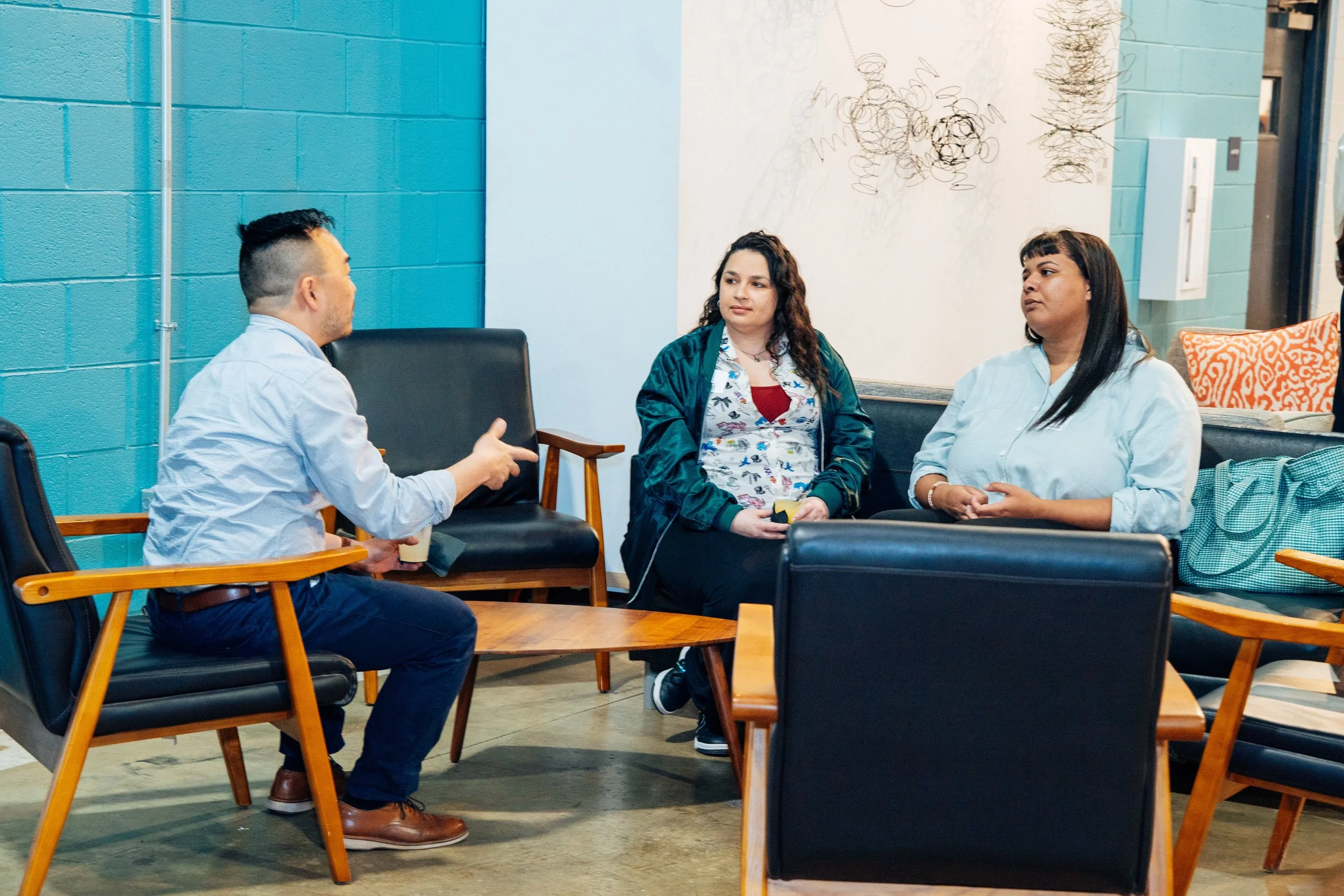
Photo by Arekusn Nguyen
Reimagining Community Through Production
The main event, Imagining the Future of Local Production, was held at BOK, a former technical high school that has since been transformed into a vibrant hub for makers, nonprofits, and entrepreneurs. Former classrooms now serve as artist studios, workshops, and storefronts, breathing new life into the historic building.
Throughout the gathering, speakers shared stories about addressing the needs of their communities through intentional development and local production initiatives.
“The common theme I noticed among the speakers was recognizing a need and building a solution around it, rather than building a product or business solely for profit,” said Cassie Franklin. “Many conversations focused on repurposing vacant buildings throughout Philadelphia, and I found that relevant to my work developing training programs. It reinforced the importance of designing with the learner in mind.”
Cassie reflected on how the same intentionality used in community development applies to workforce training.
“I build courses differently for new sewing operators than I would for experienced mechanics,” she explained. “It makes sense to design cities the same way, but I had never made that connection before.”
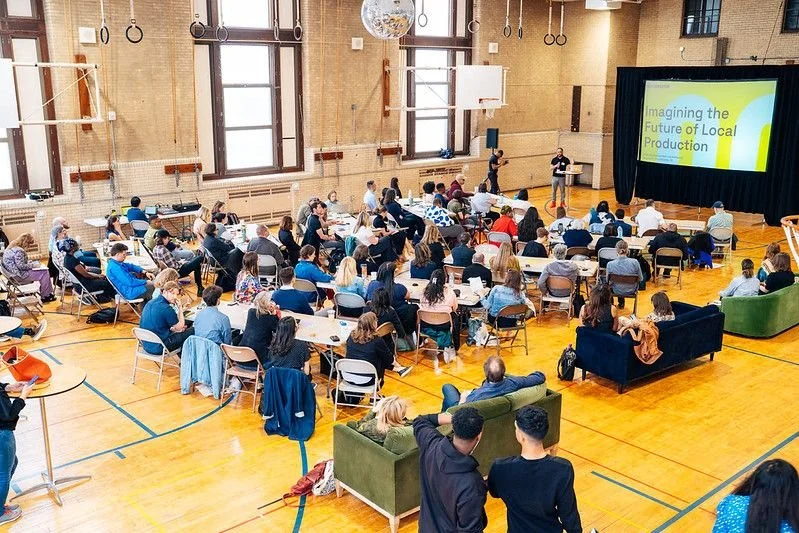
Photo by Arekusn Nguyen
Collaboration Through Design
After hearing from community leaders and changemakers, attendees participated in a collaborative design jam led by Detroit’s own Bonnie from Design Core Detroit.
Participants were divided into multidisciplinary teams and challenged to reimagine vacant Philadelphia buildings for new community-centered uses. Cassie’s group focused on transforming a former printing facility into a manufacturing and education space for a young streetwear entrepreneur. The concept included production capabilities alongside classroom and workshop space for local students.
Cassie contributed expertise around industrial sewing equipment, facility needs, and the infrastructure required to support apparel manufacturing.
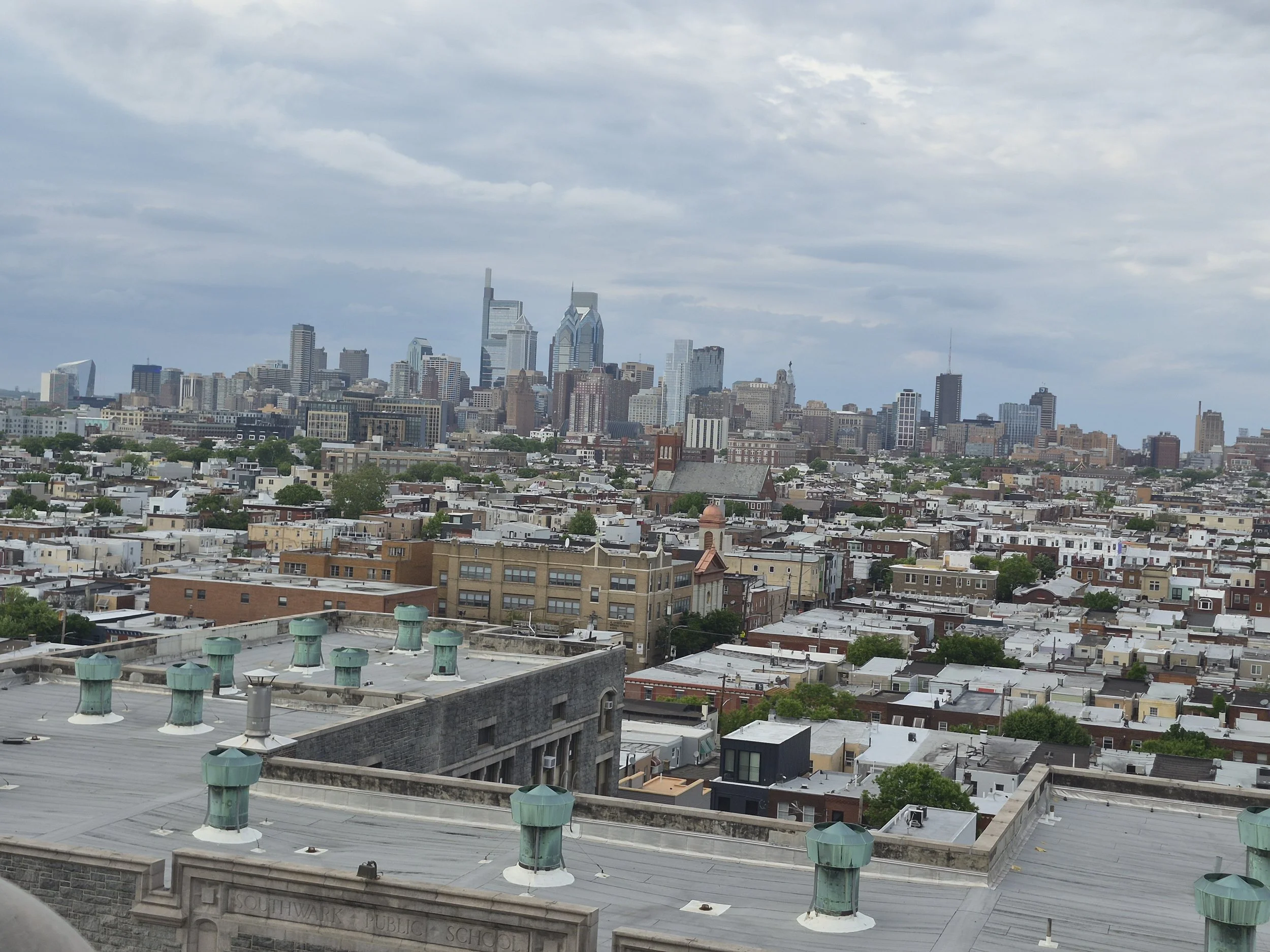
The second day concluded with continued conversations and networking on a rooftop overlooking the city skyline.
Walking Through Philadelphia’s Future
The final day featured a walking tour led by leaders from South Kensington Community Partners (SKCP), who shared insight into the challenges of advocating for responsible development within rapidly changing neighborhoods.
Participants visited local businesses navigating increasing pressure from nearby housing developments encroaching on industrial spaces. They also toured a vacant fire station that SKCP hopes to transform into a makerspace — a vision currently stalled by zoning challenges.
Along the way, Cassie and Olivia learned about broader issues impacting the community, including food access and the preservation of shared community spaces.
“Some parts of the city have very limited access to groceries, which is something I may have taken for granted as a Michigander,” Cassie noted. “Community gardens that once served neighborhoods are now being developed into additional housing. The frustration was palpable, but so was the hope.”
Looking Ahead
The gathering left a lasting impression on both Cassie and Olivia, reinforcing the importance of local production, intentional design, and community-centered manufacturing.
“It was an amazing experience to be part of,” said Cassie. “We’re in the discussion as part of the solution, and I walked away feeling hopeful about the future of local production.”
Read our latest blog post here
Or to learn more about ISAIC’s approach to innovation, visit our website here.